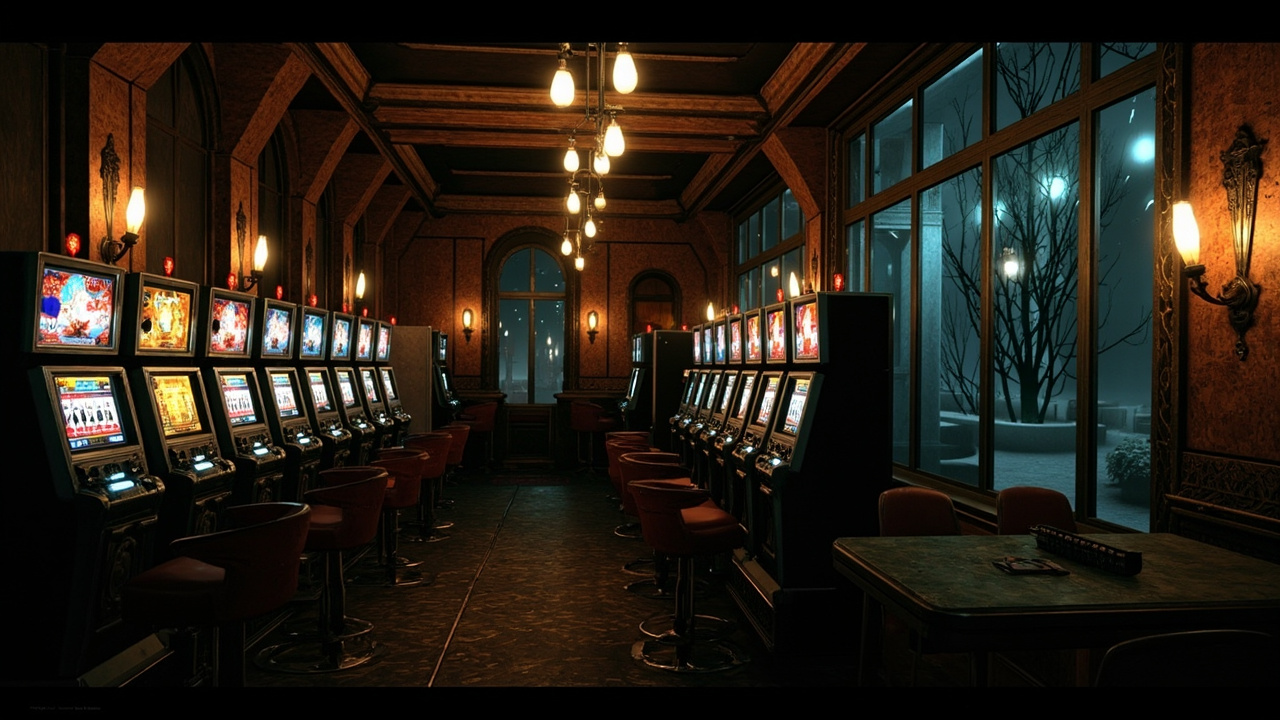
The pokies at the pub, or a late-night session online – chasing losses is the betting mistake I see Australians make more than almost anything else. Even on a platform like wanteddeadorawildau.com, the maths doesn’t budge when the result slips in the final ten. At the local in Islington, or backing the Knights at McDonald Jones, the pattern repeats. After twenty-plus years across Aristocrat, Bally Macau, TCS John Huxley, SenSen and Crown strategy, I’ll tell you willpower alone won’t save you.
The Maths Behind The Madness
Loss-chasing feels rational because the brain treats each bet as independent. It isn’t emotionally, but it is mathematically. A $50 loss on the Eels doesn’t make the next $50 bet more likely to win. The odds are the same odds they were this morning, last arvo, and last Tuesday. The bookmaker’s margin is unchanged. The variance is unchanged.
I watched this play out for years at Bally Macau. High-limit baccarat players would double, then double again, convinced the shoe was “due” to turn. The pit saw them off every single night – the same pattern, the same outcome, just different faces. The maths at TCS John Huxley taught me the same lesson with roulette: the wheel has no memory, and doubling your stake doesn’t shift the expected value one tick. It just doubles what you stand to lose. Crown’s strategy work in the early 2010s showed the same dynamic at the VIP tables – the chase isn’t a personality trait, it’s a structural response to loss.
The temptation intensifies because losses register roughly twice as hard as wins – a ratio behavioural economists have documented for decades. SenSen’s casino-floor analytics showed players ramping bet size after a loss about 70% of the time within ten minutes of the result. In a venue with two thousand pokies, that’s a thousand-plus bet-size escalations an hour. Not a moral failing – a predictable pattern. And predictable patterns can be designed against.

The trick is putting friction between you and the next bet. That friction is account controls, and it’s the only realistic answer to a problem willpower can’t outrun.
The Account-Control Alternative
Forget “just walk away.” The alternative is a set of platform-level tools that pre-commit your behaviour before the dopamine kicks in. You set the rules when you’re calm, and the system enforces them when you’re not.
| Control Tool | What It Does | Best For |
|---|---|---|
| Deposit limits | Caps top-ups per day, week or month | Stopping overspend before it starts |
| Loss limits | Hard stop at a pre-set net loss | Killing the chase mid-cycle |
| Reality checks | On-screen prompt every 30 or 60 minutes | Breaking the session trance |
| Time-outs | 24-hour to 6-week cooling-off period | Resetting emotional state |
| BetStop registration | National self-exclusion across all AU-licensed operators | Long-term break |
Australian-licensed operators like Harbourside Wagering Pty Ltd (licensed by the Northern Territory Racing Commission, AUD only) build the lot in by default. You set a $200 weekly loss cap, and the system refuses the next bet that would breach it. No override, no “just one more,” no live-chat escalation to sympathy.
The shift from willpower to engineering isn’t just kinder – it’s more effective. A sticky note on the fridge loses to a platform-enforced block every time. The brain in chase mode is the brain least able to honour a promise made twenty minutes earlier. Account controls don’t moralise. They just enforce what you decided when you were thinking clearly.
Eliza Walker, Risk and Integrity Manager at Laneway Interactive Media, is blunt about the standard: “The platforms doing the right thing make it harder to chase than to stop. If the friction is in the wrong place, the design has failed.”
Andrew Robinson, Head of Analytics at Waratah Digital Group, adds the commercial proof: session data shows players using loss limits dispute fewer withdrawals and stay active longer – they’re not in a panic when the bets settle.
This is the alternative priority. Not more games, bigger bonus mechanics, or faster withdrawals. Controls that actively work against the loss-chase instinct.
Reading The Fine Print That Actually Matters
The marketing will sell you a thousand spins and a matched deposit. The licence page tells you what’s really going on. For Australian adults wagering online, that’s the Northern Territory Racing Commission for digital sports and racing, or state bodies like Liquor & Gaming NSW for venue-based play. Offshore operators accepting Australian players are not licensed here – that’s not a judgement, it’s a regulatory fact, and it changes your privacy protections and your recourse if something goes wrong.
Privacy matters. Account controls only work if the data behind them – deposit history, loss limits, session length – stays accurate and isn’t trafficked to a third party. Read the privacy policy. If it’s vague on data sharing, the controls aren’t worth the screen they’re rendered on.
Support is the third leg. Live chat that picks up in under two minutes, email responses inside twelve hours, and a phone line staffed by humans during AEST business hours. If a platform can’t offer that, the rest of the polish is decorative.
Beginners moving into sports markets should note that tennis wagering fundamentals explain how rapid point-by-point betting can intensify the chase pattern when limits aren’t pre-set – the more frequent the betting opportunity, the faster the loss-size ramp.
If you’re weighing a platform, check three things before you deposit: licence, privacy, support. No exceptions, no worries.
Set the limit before you log in. Pick the cap while you’re calm, lock it in, and let the platform do the enforcing. Chasing losses isn’t a discipline problem – it’s a design problem, and the operators doing the work have already built the answer into the cashier’s own panel. If you’re in Newcastle and weighing your next bet tonight, the safest move is the one you made before the first kick-off. Use it.